
In this info sheet
Adolescence is a time for teens to explore their sexuality—something they each do at their own pace.
Talking about it helps them better understand themselves and make smarter choices. It also reduces the risks to their health and well-being, not to mention their safety.
To better understand
Each teenager explores their sexuality at their own pace. So, it’s only normal for teens to ask questions about it.
There’s much more to sexuality than just sex:
- Sexuality encompasses our thoughts and feelings.
- There is also everything going on in our body.
- It’s expressed in our relationships with others.
- It’s influenced by society.
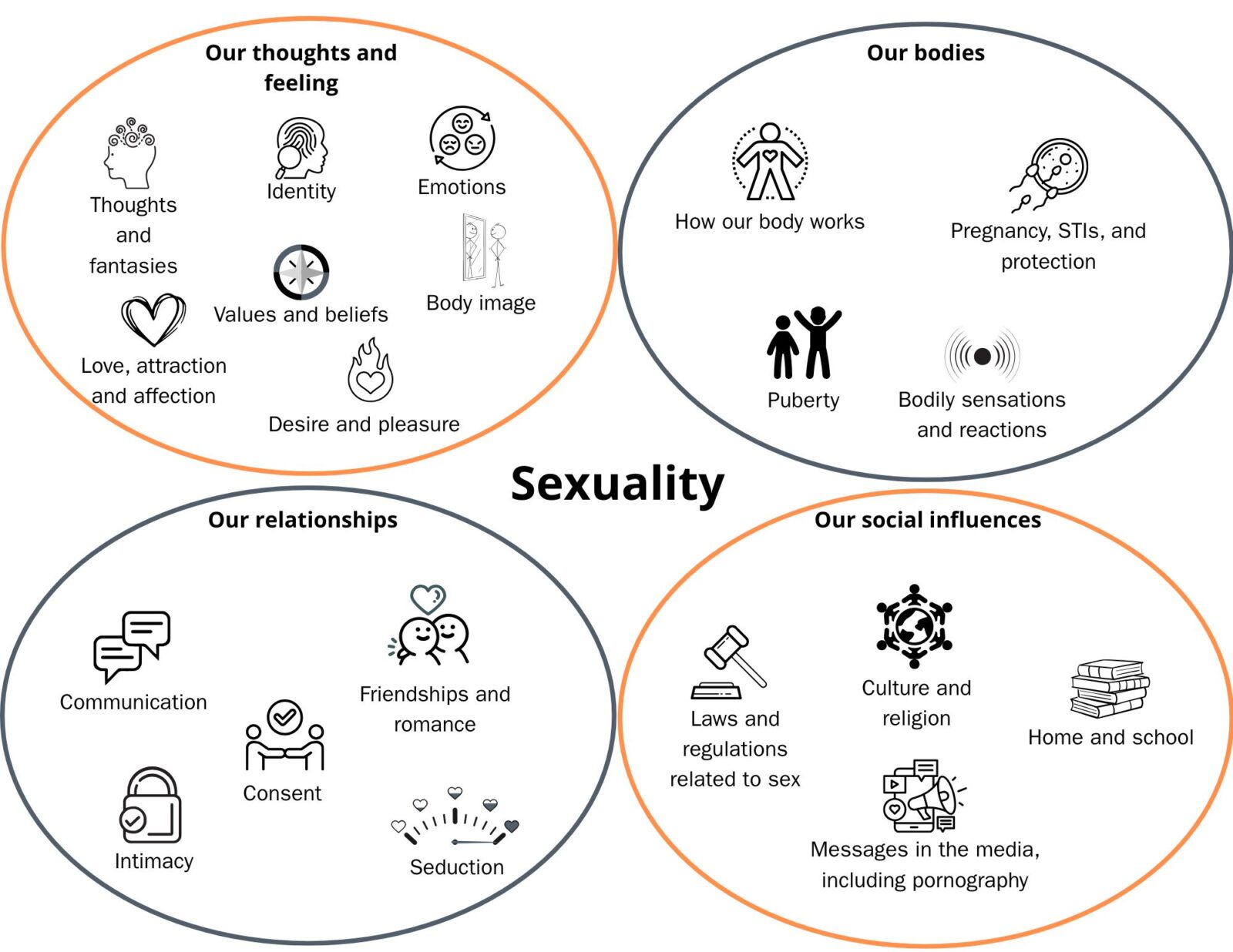
Talking to your teen about sexuality, without judgment and in a positive way, helps them to:
- Better understand themselves;
- Accept themselves for who they are;
- Understand what sexuality is;
- Form healthy relationships;
- Set boundaries and respect other people’s;
- Make informed decisions for their health and well-being.
True or false?
Talking about sexuality encourage teens to have sex.
False. On the contrary, there are several advantages to talking about it openly:
- Delaying your teen’s first sexual experiences;
- Reducing the risk of pregnancy;
- Reducing the risk of sexually transmitted infections.
True or false?
Most teens today have sexual experiences younger than before.
False. The average age of a teen’s first sexual experience has stayed the same since the 1980s, at around 16 years old.
Be there for my teen
Talking to your teenager about sexuality can feel awkward. Respect your own comfort level with the subject, while doing the same for your teen.
Inform yourself before having the discussion.
Not comfortable talking to your teen about sexuality or answering some of their questions? No problem! Ask a trusted adult to step in so your teen has someone to confide in.
Watch our short video on this topic
Our expert offers advice on how to broach this topic with your teen.

See the other En Mode Ado fact sheets for advice about other topics:
#Puberty #Romantic and sexual awakening #Sexting #Pornography #Sexual and gender diversity #Breaking up #Preventing STIs and unplanned pregnancies #Intimate partner violence #Sexual violence #Sextortion
Practical resources and tools
1. For support :
You are dealing with a situation that worries you? Ask for help:
Community organizations: family centre, youth centre, etc.
Some community organizations offer support programs for parents of teenagers. Call your local organization for information.
Intervenant∙e∙s scolaires
2. For more information :
- Mosaik, capsule 4 : Getting involved in your child’s sex education: you can do it! – PDF Document
- Tel-jeunes online information on sexuality for parents
- Sex & u, an online ressource of The Society of Obstetricians and Gynaecologists of Canada
This info sheet has been written in collaboration with :
Julie Tremblay, sexologue clinicienne et psychothérapeute, programme Aire ouverte, CISSS de la Montérégie-Centre
Isabelle Brunelle, agente de planification, programmation et recherche, approche École en santé, CISSS de la Montérégie-Est
Audrey Desparois-Couture, coordonnatrice clinique, CALACS La Vigie
Nancy Patry, intervenante aux relations extérieures et concertation, Maison Hina
Last updated
: