
In this info sheet
Between school, homework, extracurricular activities, relationships, and friendships, teenagers have a packed schedule! On top of all that, many teens choose to get a job.
Why do they decide to work? It could be to feel more independent or gain work experience.
What are the pros and cons of working during adolescence? As a parent, how can you help?
Working while in school: possible benefits
When a teen achieves balance between work and other activities, they can experience the following benefits:
- Experiencing new things.
- Developing time management skills, sense of responsibility, and independence.
- Getting to know themselves better and exploring future career interests.
- Improving their self-confidence.
- Learning and developing new skills.
- Feeling valued and appreciated.
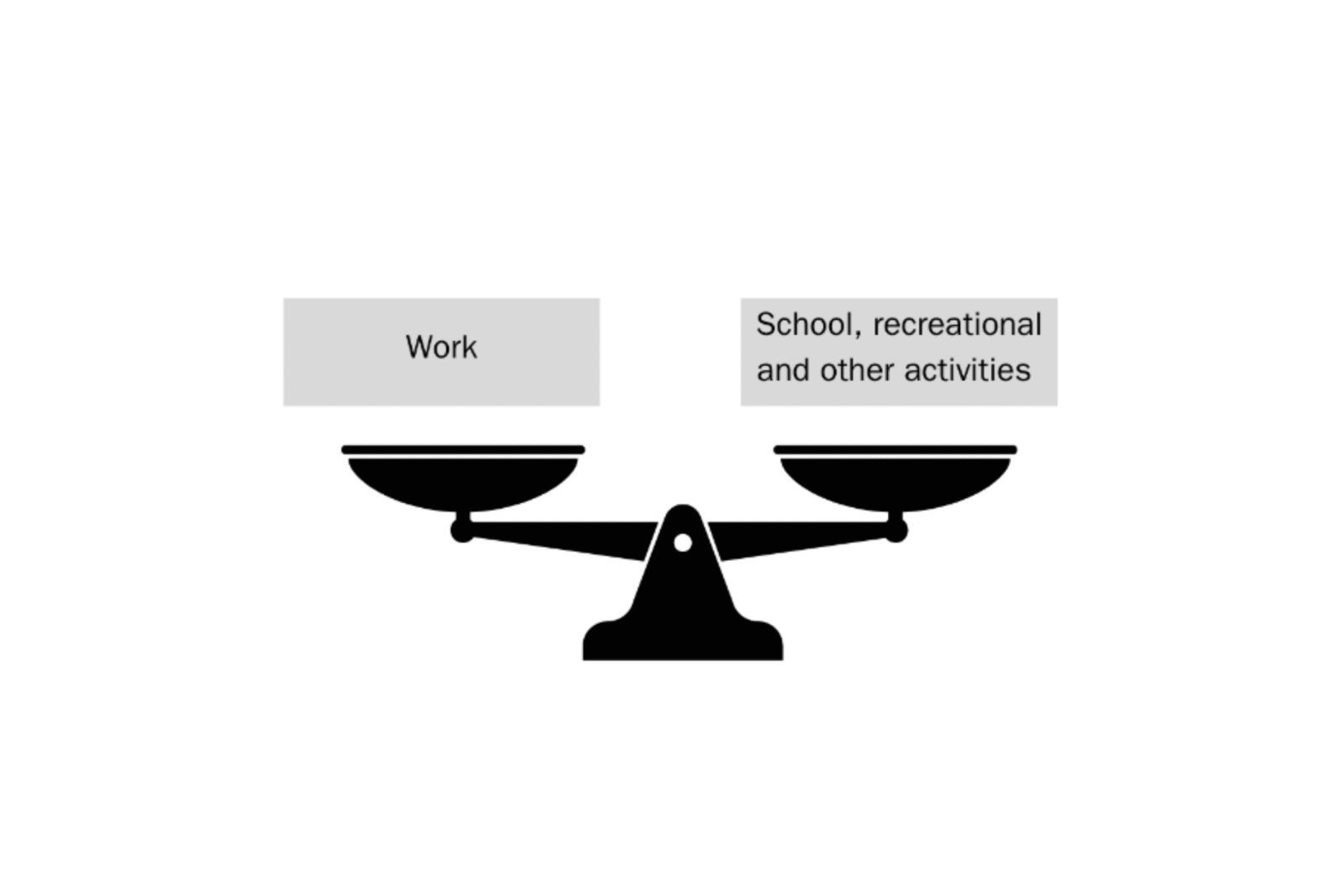
On the other hand, without balance, working can have many cons
This can be the case when a teen works more than 15 hours per week:
- Feeling less motivated in school.
- Failing or getting bad grades, which can affect self-confidence.
- Higher risk of dropping out of school.
- Having less time for family, friends, and recreational activities.
- Feeling exhausted, and even developing signs of anxiety and depression.
- Higher risk of workplace injuries.
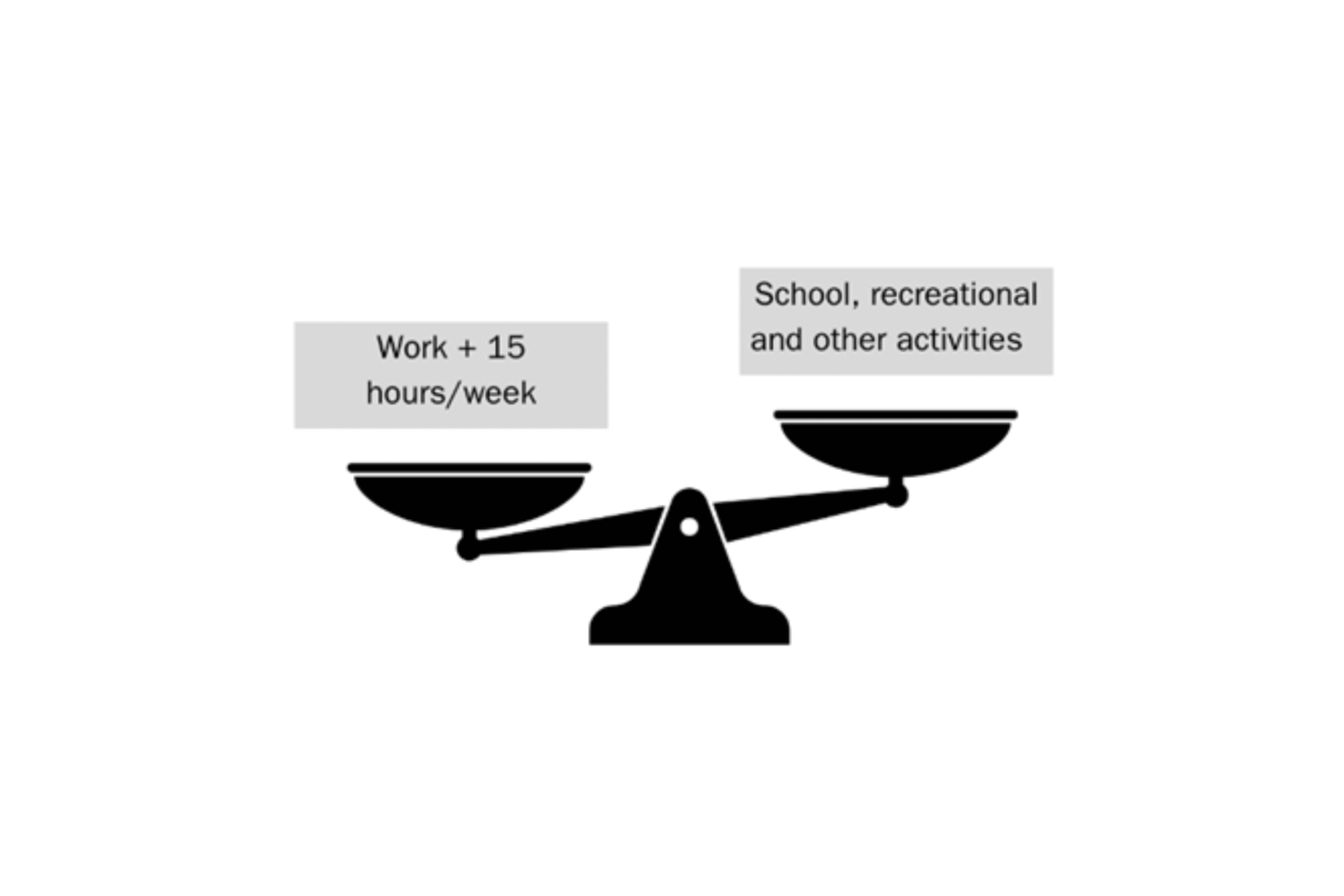
Working can be a positive experience for high school students. But having a job is not essential to their development. Teenager can also do a variety of things such as volunteering, sports, and recreational activities.
School needs to be the main priority!
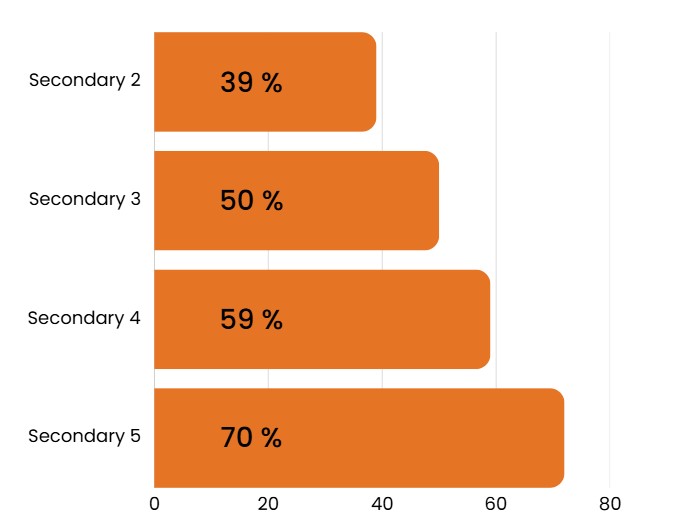
Did you know there’s now a law governing the minimum legal working age?
To learn more, consult the Aide-mémoire de Pole Réussite Montérégie (French only).
Have you heard of the Carrefours jeunesse-emploi (CJE)?
CJEs are organizations located throughout Québec that help young people find a job, go back to school, or complete a personal project. CJEs provide free, personalized advice to help each young person succeed on their individual journey.
To find your local CJE, visit TrouveTonCJE.com (French only).
Practical resources and tools
1. For support :
You are dealing with a situation that worries you? Ask for help :
Community organizations: family centre, youth centre, etc.
Some community organizations offer support programs for parents of teenagers. Call your local organization for information.
Les carrefours jeunesse-emploi : TrouveTonCJE.com
School staff members
2. For more information :
- Fact Sheets: First job – some advice to give to your teen, Youth in Mind Foundation.
- Fact Sheets: Warning signs of physical and psychological exhaustion in working teens, Youth in Mind Foundation.
- Facts Sheets: Some advice to give your teen for their first job, Youth in Mind Foundation
3. References
Québec Government. (2023). Loi sur l’encadrement du travail des enfants (S.Q. 2023, c. 11) [French].
https://www.publicationsduquebec.gouv.qc.ca/fileadmin/Fichiers_client/lois_et_reglements/LoisAnnuelles/fr/2023/2023C11F.PDF
Réseau québécois pour la réussite éducative. (n.d.). Conciliation études‑travail [French].
https://reussiteeducative.quebec/fr/reussite-educative/conciliation-etudes-travail
Réseau réussite Montréal. (2023). La conciliation études‑travail [French].
https://www.reseaureussitemontreal.ca/wp-content/uploads/2023/03/RRM_FicheCET_2023.pdf
This info sheet has been written in collaboration with :
Elise Cadieux-Lynch, travailleuse sociale et agente de liaison avec les partenaires, Aire ouverte Brossard, CISSS de la Montérégie-Centre
Marie-Eve Hamelin and Myriam Sweeney, coordonnatrices concertation et liaison à Pole Réussite Montérégie
Jérome Emery, directeur adjoint et Guylaine Turpin, directrice générale au Carrefour Jeunesse Emploi St-Hubert.
Last updated
: